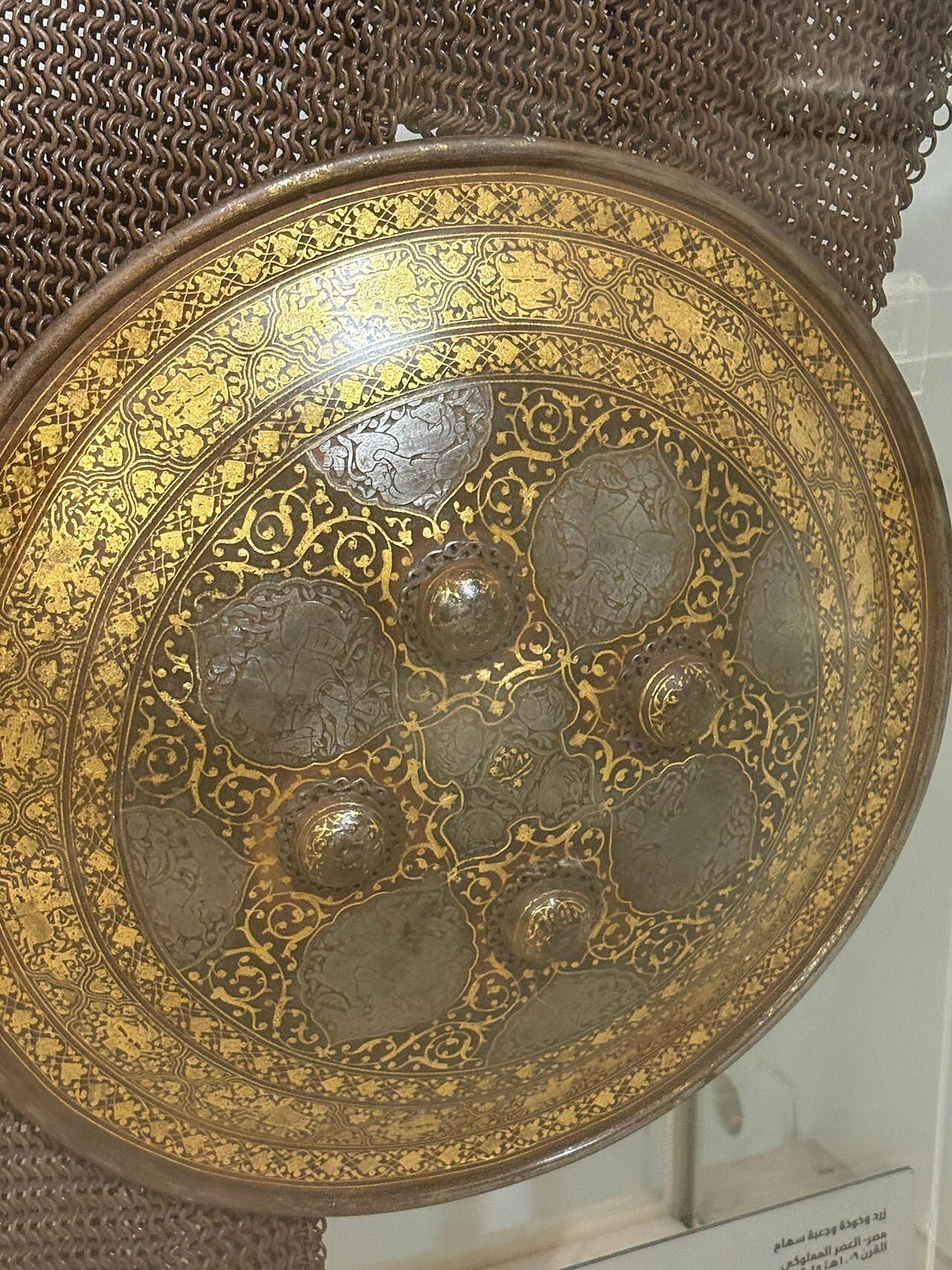
A museum gallery is a modern narration built through selection, sequence, labels, lighting and comparison. Reading that curatorial voice does not discredit the collection; it reveals how evidence becomes a public argument.
Find the gallery's opening claim
Introductory panels, section titles and the first object establish the question. Does the room prioritize chronology, material, belief, region, ruler or civilization? Write the claim in one sentence, then test whether later cases develop, complicate or quietly abandon it.
Read sequence as syntax
Objects placed before and after one another create relationships even without explicit text. A chronological line implies development; a material group emphasizes technique; a reconstructed context suggests association. Check labels before treating visual proximity as an ancient connection.
Notice scale and visual hierarchy
Central placement, spotlighting, empty space and large labels direct attention. A monumental object may dominate because of ancient scale, modern fame or practical architecture. Compare one prominent work with a modest neighboring object and ask which evidence each contributes to the gallery claim.
Separate label voice from quoted voice
A curatorial sentence, translated inscription, historical excavation note and community quotation have different authors. Typography may make them appear equal or mark their differences. Identify who speaks and when. A translation inside quotation marks is still a modern scholarly choice.
Look for uncertainty in wording
“Probably,” “attributed,” “may have” and broad dates signal the limit of the argument. Strong declarative prose can be necessary for clarity, but should not erase scholarly uncertainty. Preserve cautious language in your notes and ask what new evidence would change the attribution.
Read omission through the available space
A gallery cannot include every excavation record, object or debate. Identify the one missing context that most affects your question rather than assuming every absence is intentional concealment. Official catalogues and specialist museums can supply depth a broad survey cannot.
Compare institutions instead of ranking them
GEM, Tahrir, NMEC, the Coptic Museum, MIA and regional museums organize different evidence. Carry one object type or question between two displays. The change in framing is itself useful: it shows how national breadth, specialist detail and regional history produce different narrators.
End by naming the museum's contribution
Write what the display made newly visible, what ancient relationship it removed and what modern comparison it created. This balanced record avoids both passive acceptance and automatic suspicion. Curatorial work becomes another documented voice in the object's continuing history.
Notice where the visitor becomes a narrator
Maps, prompts, open sightlines and alternative routes allow visitors to build different sequences. Your route is not the gallery's only possible argument. Record where you departed from chronology or followed a material across rooms, and which new comparison resulted. This separates intentional curatorial structure from the path created by fatigue, crowding or personal interest.
Check whether digital media changes authority
A screen, animation or audio track may offer excavation records, reconstruction or several speakers beyond the wall label. Identify source and date just as you would for printed text. Technical polish can make a proposal feel certain; a useful digital interpretation shows which evidence supports the reconstruction and where alternatives remain.
Primary sources reviewed 29 July 2026: Museum of Islamic Art ↗ · NMEC ↗. Displays and visitor conditions may change.