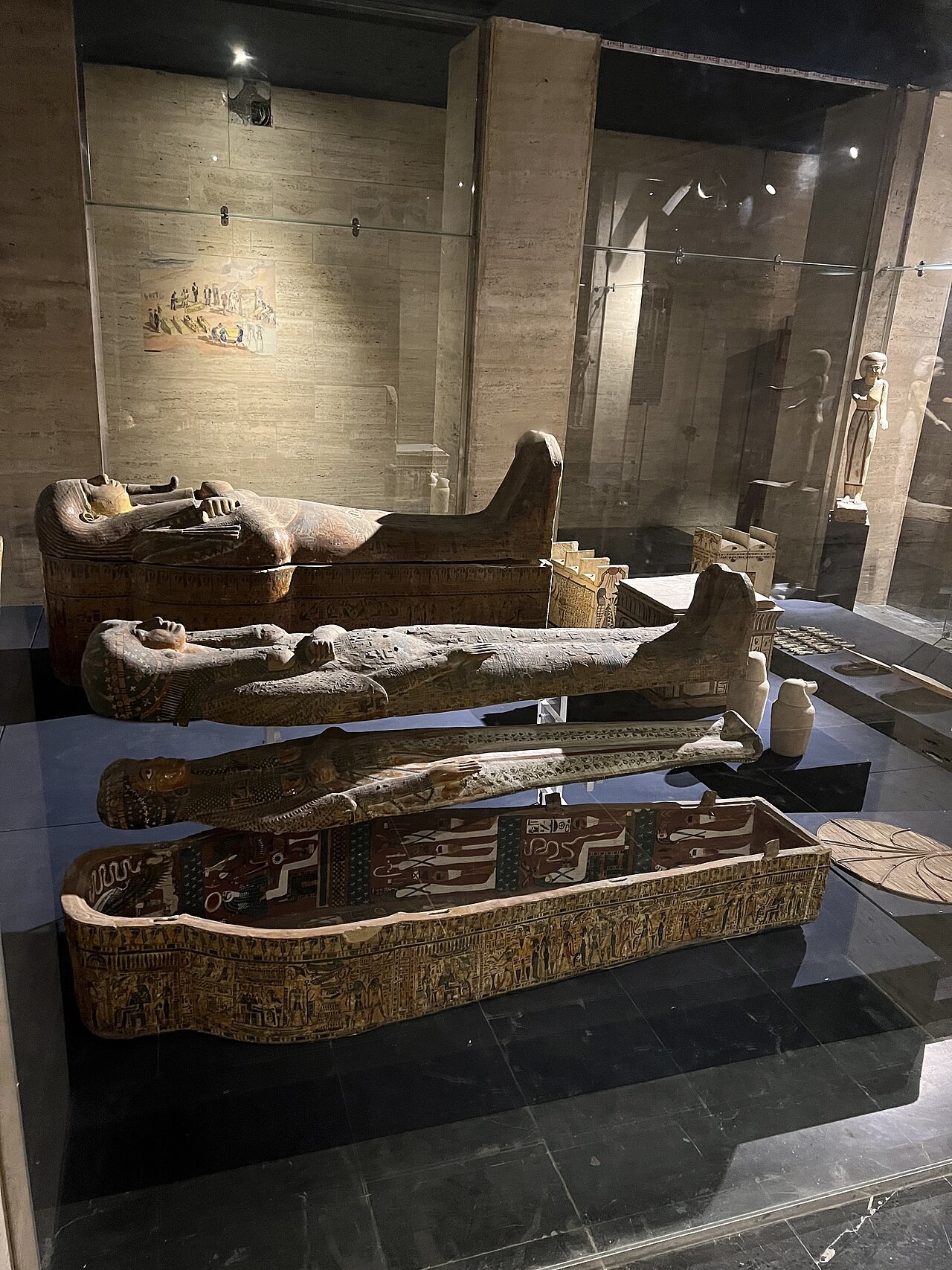
Archaeological context is a documented relationship among object, place, layer, architecture and associated finds. It speaks most clearly when the museum preserves its precision and its gaps.
Copy the smallest stated findspot
Country, region, site, building, room, burial shaft and excavation unit offer different levels of evidence. Record the most specific wording and its uncertainty. “From Luxor” cannot support the same reconstruction as a numbered cache or room.
Separate findspot from original setting
Objects moved before modern discovery. Tombs were reopened, statues cached, stone reused and portable goods circulated. “Found at,” “made for” and “used in” should remain different statements. The excavation location is evidence, not automatic proof of first use.
Restore associations hidden by display
Objects excavated together may now be divided by material or chronology. Look for shared tomb, cache, excavation or inventory numbers. Conversely, neighboring objects in a thematic case may never have met in antiquity. Write which relationship is archaeological and which is curatorial.
Read the date as a range of evidence
Stratigraphy, inscription, material analysis and stylistic comparison can produce different kinds of dates. A precise reign may identify one phase while associated objects span longer use. Preserve broad ranges and words such as “probably” rather than converting them into one confident year.
Use absence carefully
Missing objects can result from ancient selection, decay, disturbance, excavation methods or later division of a collection. Absence in a case is not absence from the site. Ask what was preserved and recorded before interpreting what is not visible.
Notice how excavation was documented
Plans, photographs, notebooks, object numbers and publications make relationships reusable. Older excavations may supply uneven records; rescue work may prioritize speed and documentation under threat. Documentation quality shapes what later museums can claim, so it belongs inside the history of interpretation.
Keep disturbance in the story
Robbery, rebuilding, flood, reuse and modern development can mix or relocate evidence. “Disturbed” does not mean worthless. It identifies processes that must be reconstructed. Several phases in one location may be the historical result rather than a failure of classification.
End with the claim the context permits
Write the narrowest supported conclusion: an object belonged to a documented group, was deposited in a phase, or was found without secure provenance. Then list the additional record that would strengthen the claim. Context works best when it limits as well as expands interpretation.
Distinguish excavation history from ancient history
The date an object was discovered, recorded, divided or transferred belongs to a modern sequence. It can explain why evidence is available and where related material now resides, but it is not an ancient phase. Create parallel timelines for ancient use and modern recovery. Their intersection is the archaeological record rather than a reason to merge both into one date.
Use object numbers to reconnect records
Names such as “wooden figure” or “painted coffin” are rarely unique. Museum and excavation numbers can connect the case with catalogues, photographs and related fragments. Copy punctuation and prefixes exactly. Even when no research follows immediately, the number preserves a reliable path back to the specific object and its documented relationships.
Primary sources reviewed 29 July 2026: Egyptian Museum ↗ · UNESCO Nubian Monuments ↗. Displays and visitor conditions may change.