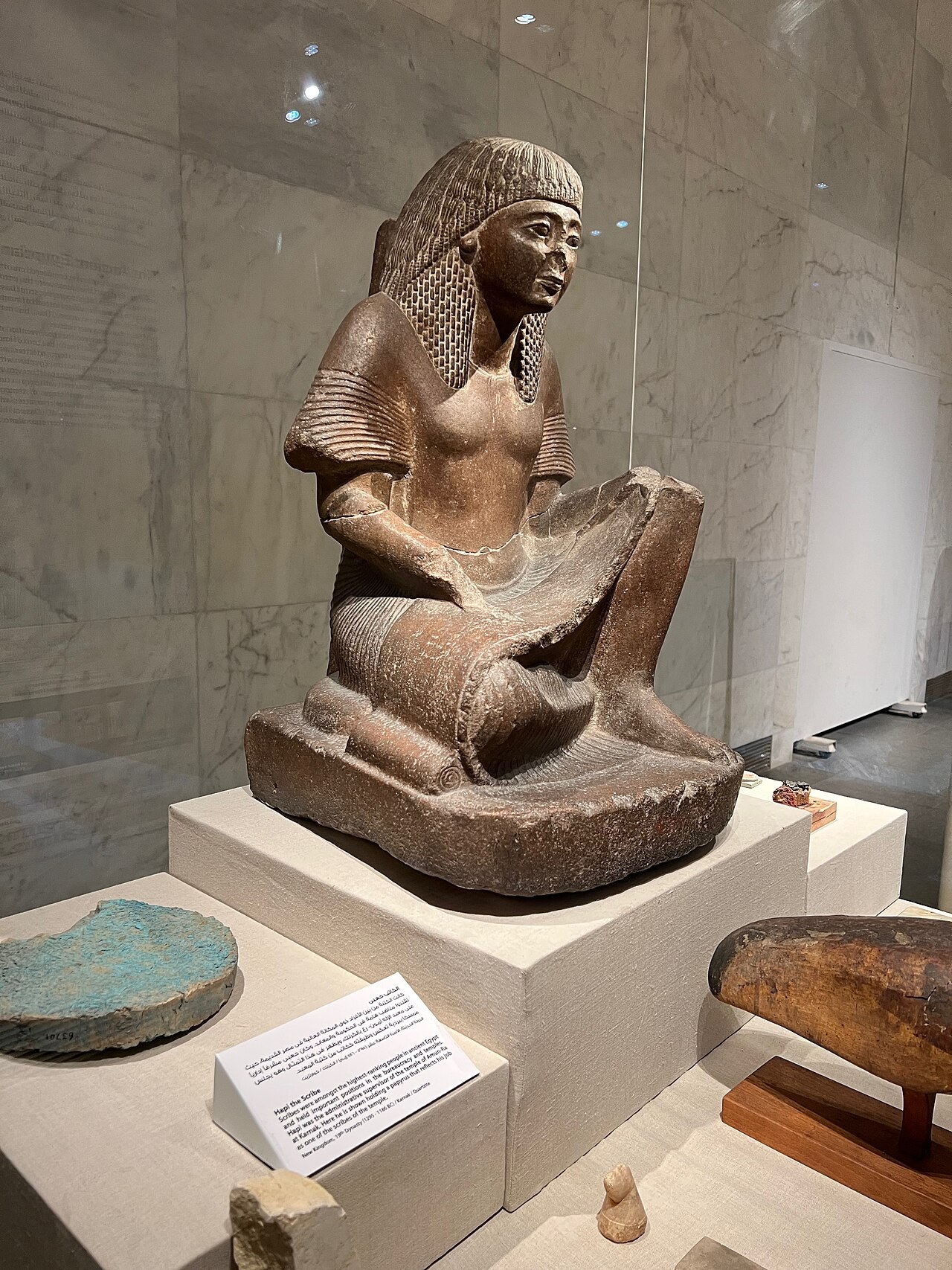
Most museum objects have no securely named maker. Their hands still enter the gallery through material choice, tool traces, joins, repeated forms, corrections and the sequence of work.
Replace “artist” with an observable decision
Begin with the action you can see: carving a recess, controlling a vessel wall, joining wood, ruling a page or weaving an edge. “Skilled artisan” is too broad unless the object reveals which skill was required. Naming one technical decision creates a grounded route into otherwise anonymous labor.
Read edges, backs and breaks
Decoration attracts attention, but unfinished surfaces, holes, seams, pegs, rivets and fracture lines often explain construction. A fragment may reveal layers hidden in a complete work. Check whether the current mount blocks an original edge and distinguish an ancient join from a modern conservation support.
Reconstruct the order of operations
Ask what had to happen first. Stone was shaped before final polish; a manuscript support could be ruled before text; joined wood might be prepared before paint. Overlapping marks and concealed fastenings help establish sequence. When two orders remain plausible, preserve both rather than turning a guess into workshop certainty.
Find collaboration inside one object
A coffin, manuscript, inlaid metalwork or painted statue may require several kinds of knowledge. Separate quarrying, transport, shaping, joining, writing, painting and finishing. The modern idea of one creative author can hide teams, apprentices, specialists and institutional organization that the physical object makes visible.
Use repetition to hear practice
Several similar figures, letters or vessels reveal templates, measurements, molds and repeated gestures. Small differences may reflect hand finishing, material limits, repair or another workshop—not carelessness. Compare the same detail across five examples before deciding whether variation is meaningful.
Recover resources and supply
Stone, timber, fibre, pigment, metal, fuel and glass ingredients connect the maker to landscapes and exchange. Do not assign a specific quarry or route without evidence. Instead ask which resources had to be obtained, prepared, transported and stored, and which parts might have been reused.
Distinguish maker, commissioner and owner
A named person on an object is not automatically its maker. The inscription may identify the represented figure, patron, donor, intended beneficiary or later owner. Read the wording and label carefully. Keep roles separate unless the evidence joins them.
Let conservation extend the making history
Objects survive through later repairs, storage and modern treatment. An ancient patch belongs to continued use; a modern fill supports safe interpretation. Both involve skilled hands, but their aims differ. Noticing them turns “made once” into a longer material biography.
Compare finish with visibility
The side intended for close approach may receive a different finish from a hidden back or high architectural surface. Do not label the less-finished area careless. Ask where the object stood, how light reached it and whether later reuse changed the visible face. A comparison of front, side and reverse can reveal how makers allocated time and detail for a specific ancient viewer.
Keep uncertainty around workshop identity
Shared measurements or carving habits may suggest a workshop tradition, but resemblance alone rarely names an individual team. Use cautious language such as “related technique” unless inscription or archaeological documentation is stronger. Anonymous work is not evidence-free work; it simply shifts attention from biography to practiced knowledge and organization.
Primary sources reviewed 29 July 2026: GEM collection ↗ · Museum of Islamic Art ↗. Displays and visitor conditions may change.